

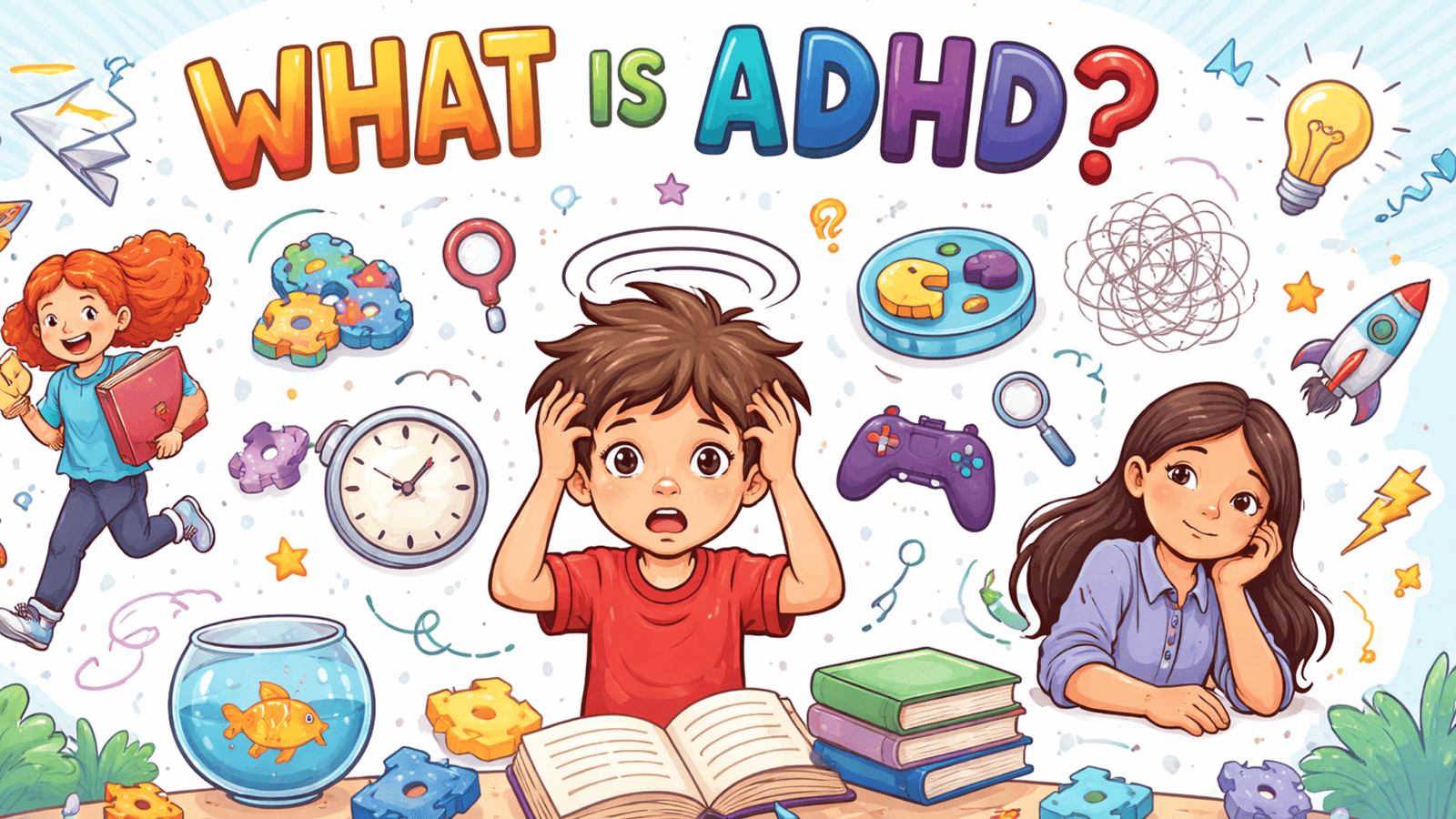
TL;DR (Because… ADHD)
ADHD (Attention-Deficit/Hyperactivity Disorder) is a lifelong neurodevelopmental difference that affects attention, impulse control, motivation, time awareness, and emotional regulation.
It’s not laziness… or lack of willpower… or ‘everyone’s a bit ADHD nowadays’.
It’s a brain that prioritises, processes and regulates differently. With the right understanding, support, and medication (for some people) people with ADHD can build lives that work for them, instead of trying to survive ones that don’t.
So… What is ADHD?
ADHD is a brain-based difference that mainly affects executive functions, the part of your brain that helps you start tasks, plan and organise, remember things, manage time and regulate emotion and energy.
Clinically, ADHD is diagnosed when patterns of inattention and/or hyperactivity or impulsivity cause real difficulties across daily life, whether that’s work, education, home or relationships. It is also present since childhood, even if no one noticed back then.
A few useful facts:
- Around 5% of children and roughly 2-5% of adults worldwide are diagnosed with ADHD.
- It can be hereditary – heritability is estimated around 70-80%.
- Masking, missed diagnosis and outdated stereotypes are some of the reasons why so many people are realising now. This is especially true in non-binary people, women and anyone who didn’t fir the ‘disruptive little boy’ mould.
What ADHD Actually Looks Like
ADHD doesn’t look the same for everyone and can be very difficult to spot.
There are three main presentations:
- Inattentive:
- Struggling to sustain attention
- Forgetting things constantly
- Losing items you just had
- ‘Time blindness’
- Task initiation paralysis
- Mental fatigue and daydreaming
- Hyperactive-Impulsive:
- Restlessness and fidgeting
- Talking fast, or a lot
- Interrupting – not being rude, but because you’ll lose the thought
- Acting before thinking
- Chasing stimulation
- Combined:
- A mix of both – this is very common
ADHD across ages – what it’s like in real life:
- Focus – hyperfocus for hours on something that draws interest, then feel physically unable to start a boring task
- Time and Planning – chronic lateness, missed deadlines, wildly underestimating how long things take
- Organisation – doom piles, clutter cycles and half-finished projects all over the place
- Emotions and Energy – big feelings, rapid mood shifts, inconsistent sleep and burnout
- Social – forgetting plans (despite caring deeply), interrupting and missing social cues
You might hear people talk about Rejection Sensitive Dysphoria (RSD); this is intense emotional pain linked to perceived rejection or criticism. It’s not an official diagnosis, but a lot of people with ADHD recognise it instantly. See more about RSD here.
What’s Going on in The Brain?
ADHD brains process reward, motivation and attention regulation differently. Neurotransmitters like dopamine and norepinephrine play a role which is why interest changes everything, urgency unlocks productivity and ‘just try harder’ rarely works.
ADHD isn’t about motivation, it’s about regulation. Change the environment, structure or reward, and performance can change dramatically.
Conditions That Often Co-Occur
ADHD rarely exists on its own. Common co-occurring conditions include:
- Anxiety and depression – often linked to years of stress or masking
- Autism, dyslexia, dyspraxia (DCD), tourette’s
- Sleep issues including insomnia and delayed sleep phase
- Premenstrual dysphoric disorder (PMDD)
- Substance use, sometimes used as medication
There are also other medical conditions that can mimic or worsen ADHD symptoms, including thyroid issues, iron deficiency, sleep apnoea, chronic pain or trauma, this is why assessments matter.
What is Autism?

ADHD and Emotional Dysregulation: What It Is and Why It Happens

What is Rejection Sensitive Dysphoria (RSD)?
Treatment and Support for ADHD

ADHD Tax: What It Is, Why It Happens, and How to Reduce It
What is Autism?
ADHD and Emotional Dysregulation: What It Is and Why It Happens
Treatment and Support for ADHD
ADHD Tax: What It Is, Why It Happens, and How to Reduce It
